Showing posts with label The Patriarchy. Show all posts

Monday, 27 April 2015

Farewell to the Men's Team

By Nathan Kalman-Lamb


Well, I'm sorry to announce that my time leading the Men's Team has drawn to an end. This will be my final post for the Men's Team blog, just as this is my final day working on behalf of the Team.

It has, I believe, been a very productive year. When I began in May 2014, the on-line presence of the Men's Team was practically non-existent. There was a Twitter account with nine followers. There was a Facebook page. There was little else. Based on the premise that in this day-in-age, an on-line presence is at least as important as a physical one, we worked hard to change that. Today (as of the minute I type this), our Twitter account has precisely 1,567 followers.  Even more significantly, we founded this blog, which, as of this moment, has been viewed 4,488 times in less than a year.

Do these numbers matter? I think they do, for reasons beyond self-aggrandizement (although I am proud of them!).

As the year has advanced, it has become more and more clear to me that the Men's Team has a principal purpose above all others. Of course, our mandate has been and continues to be to struggle to redefine masculinity as part of a larger project to end gender-based violence. That is an immense ambition, however, and one that cannot realistically be imminently accomplished. This does not mean that the project of the Men's Team is misguided or even Sisyphean, however. For, the most important role of the Men's Team, I now believe, is symbolic. Not tokenistic, mind you, but symbolic. The symbol of an organization of men who stand alongside women in the feminist struggle against gender-based violence matters.

It matters because, from an ethical standpoint, it is important for men to stand up and model to other men that it is possible to do what is right, even if it is difficult and/or unpopular work.

It matters because it gives feminist women who must waste hours and hours of their time arguing with MRAs (Men's Rights Activists) on-line that their message is getting through to some men, and that there is hope things will get better.

It matters because it tells everyone who has suffered directly or indirectly as a consequence of the ideology of hegemonic masculinity that there is an alternative and that there are people who are committed to it.

The value of our increased on-line presence is that we have been able to disseminate that symbolic presence far more widely than in the past. We have let people know that we exist and that we are here for all of the above-stated reasons.

Of course, for precisely all of the same reasons, it is also important for the Men's Team to have a physical presence. To that end, members spent many a Friday in the past year tabling in Vari Hall at York University in an effort to initiate conversations on gender-based violence and masculinity. We also hosted a (wildly successful, in my humble opinion) workshop on masculinity and advertising.

This is all work that I hope will continue and be built upon in the future under new leadership. For now, I would like to warmly thank the members of the Men's Team who devoted a great deal of time and effort this year: Christopher Ford, E. A., Ernest Velasquez, Tony Barone, and Trevor York.

Thank you also to each of you who took the time to read and comment on what we had to say on the subject of masculinity and gender-based violence, whether that was here on the blog or on Twitter, and to those who stopped to chat in Vari Hall. I found it meaningfully encouraging to see just how many people care deeply about this subject and are unwilling to settle for the status quo.

Finally, please allow me to add this final statement of principle. We live in a patriarchal society -- a society that structurally privileges men at the expense of women. One way in which patriarchy manifests is through the identity category of hegemonic masculinity. Hegemonic masculinity, at its core, operates according to the logic of coercive entitlement. It teaches men that they deserve to have whatever it is they are able to take by force. This is why masculinity is directly connected to gender-based violence. Men are taught that they must aspire to dominate in every sphere of their lives, including their relations with women, and that if they succeed in doing so, they deserve to be rewarded. This is a fundamentally instrumental approach to the other and it is one (in combination with the patriarchal logic that men are inherently more valuable than women) that inevitably leads many men who internalize it to cause harm in myriad ways to the women they encounter in their lives.

As men, we need to acknowledge the privileges that we receive from hegemonic masculinity. We need to own up to our complicity in coercive entitlement. And, most importantly, we need to start working to ensure that future generations of men who follow us will see hegemonic masculinity for what it is: an archaic, bigoted, patently unethical way of being in the world.

I trust that the Men's Team will continue that project after I am gone. I can promise you that I will, regardless of where life takes me.


Wednesday, 15 April 2015

Hyper-masculinity and Feminism

By E. A.

We have all heard of the classic match-up, the proverbial battle that is waged between feminism and masculinity.

Those who have familiarized themselves with feminist philosophy understand this illusion for what it is: a narrative that figures feminism as the antagonist and doomsayer for men and masculine identity. So, why then do even educated men identify with a strong anti-feminist perspective? It stems from a variety of well integrated facets of masculine identity. The foundational traits of “manliness” emphasize dominance, competitiveness, strength, and tenacity. These qualities themselves create an atmosphere of hostility and aggression. The simple fact of being a man in contemporary society breeds an aggressive approach to any activity we may partake in, be it sports, academia, or the like. There is a certain type of personality imposed upon and ingrained in most men that they carry with them throughout their lives, and even when sublimated, becomes an almost defining characteristic of their actions.

When faced with criticism or resistance, there is also a natural inclination to defend ourselves. As people we are told that our culture and identity is what defines us, and quite sensitively, if this is questioned we must reassure not only the critic of our aptitude, but also ourselves.

There is an existential quality to our actions as well. Most are motivated by various concerns, but there is typically a commonly shared notion that sees progression as a means to an end. This sees our impact on culture as paramount to our existence; we wish to leave our mark upon society whether it is a lasting ideology, or some other contribution to the future. Herein lies the strength of tradition. To question it has been treated historically as blasphemy, heresy, even seen as a psychological abnormality. It is only recently that in western society has there been a larger consensus to accept criticism and learn from the revision and questioning of larger institutions.

Indeed, some see our “new” critical lens as something radical, left-wing, or anti-authoritative. Although sometimes true, it stems from a very necessary and iconoclastic approach to the failures of time past. We (especially here at York) admire Karl Marx; U.S history and identity is based on revolutionary fighters such as George Washington and Ulysses S. Grant; and Canadian culture is based on the cohesive diversity of cultures, something radically different than any other nation. The ability to challenge tradition has created prosperity and equality, the cornerstones of our strengths as a society. So, then, returning to our initial question, why is there such a real resistance to the ostensible threat that is feminism?

For many people who experience white privilege, the revelation of knowledge about structural racism and colonial violence can revolutionize the way they see the world. This is a profound challenge to notions of comfort and tradition they may have previously embraced, for it undermines their own sense of identity, history, and entitlement. The phenomenon is much the same when it comes to the question of masculinity. Men are terrified not only that women might achieve structural equity that will result in the loss of their privileges, but also that the very foundations of their identity might be called into question as illegitimate. Men who have typically risen to social prestige are now openly challenged. Within the ranks of feminism there are thinkers who reshape the role of women, who see them as existential players within our culture, rather than servants of outdated ideology. There are even some thinkers who challenge the very foundations of sexual relationships within the old-fashioned paradigms. If we take away dominance, undermine aggression, and challenge the norms known to men, then we can see why some are quick to see a mere criticism as a full blown attack to their existence.

Maybe this is why there is a very disturbing trend of men creating and joining “men’s rights activist” groups – organizations that aim to undermine the worth of women, while thinly veiling themselves behind the rhetoric of masculine victimhood. These groups are quick to defend insidious practices like cat-calling which they perceive to be all in good fun – willfully ignoring the fear and anxiety that they provoke in women, nor the connection such practices share to more extreme forms of sexual violence They fail to understand that feminism exists to curtail the exploitation of women and to create an atmosphere that celebrates the worth of women in a society that has historically sought to diminish them. Men who see feminism as antagonistic are frustrated and confused, scared and lost within a society moving towards equality and diversity. But, so too have women been scared in the face of patriarchal oppression. Thanks to their efforts, it is time to move beyond fear. Feminism is the ally of equality, while hegemonic masculinity is the antithesis of progress.

Monday, 9 February 2015

Hegemonic masculinity, media, and advertising

In what follows, we offer a sampling of the advertisements discussed in the workshop we held on February 4, 2015 and some of the commentary that accompanied them. Unfortunately, what we cannot provide is a sampling of the lively and entertaining discussion that made the two hours we allotted for the session feel far, far too short. For a glimpse of that, you will have to join us the next time!

- Nathan Kalman-Lamb

Poster for The Men's Team's workshop on masculinity and advertising.

Advertising is simply everywhere; it has become part of our daily audio/visuals and our daily mindset. Nike’s slogan, “Just do it” represents the power and the global influence of advertising. It seems like we are exposed to 100 times the amount of advertising we were even fifteen years ago due to the extent to which media is now broadcasted and received through personal devices. One thing that hasn’t changed, though, is that men and women continue to be represented in radically different ways.

Representation for men and women is considerably different. Men are usually represented as serious, muscle-laden, and dominating. Women are typically portrayed as confused, uncertain, and, perhaps most ubiquitously (unless the portrayal is negative), thin.

What happens when we do not live up to the perceived standards and socially-accepted norms? We simply buy products and services, whether we really need them or not, that promise us satisfaction, happiness, status, even an improved sex life. If we do not buy these products, most of us fear is that we will feel a lack of worth, depression, lower self-esteem, and insecurity, regardless of if we are men or women.

So taken are we with living up to a certain standard or standards presented in media and advertising that we will go to extremes to challenge any obstacle to our personal gender identity and/or gender expression. Some feel so strongly about this that they come to see gender-based violence in one or more of its myriad forms as acceptable. Some feel that being considered beautiful, no matter what the cost, including cosmetic surgery, which has tripled world-wide over the past ten years, becomes justified. They are not.

- Tony Barone


The above ad depicts a hockey coach who is overtly emotional while trying to motivate his team. The interesting part of this commercial is the reaction he elicits from the players, who seem both confused and irritated. The ad condescendingly states "there's no place for sensitivity in hockey," underlining the absurdity of being openly emotional when in a typical masculine atmosphere. The correlation of sports and masculinity is a dominant cultural code in our society, with young boys being mentored in an atmosphere that encourages hostility, aggression,  and a lack of emotion. This ad represents the conditioned stereotype evident in organized sports; the worship of strength and the celebration that comes with the denial of emotion. 

- E. A.


At first glance the commercial comes across as funny and entertaining, but on closer inspection what we are really seeing is media playing with and mixing up our understanding/perception of gender and gender roles.  The commercial works because its ability to disorient and provoke is memorable. This ad challenges our default perceptions of male and female roles. A computer nerd is not supposed to embody masculinity; he is not supposed to be entitled to kiss the swimsuit model.  Not in our world with very clearly defined gender roles and gender identity. The absurdity of the image of them kissing -- according to the logic of hegemonic gender norms -- reinforces the image that we are supposed to (but don't) see: Bar Rafaeli kissing a muscular Hollywood actor or model. In this case, then, masculinity is that which is alluded to but never explicitly shown.

- Tony Barone


There are a number of things implied in these two commercials. Men (and only men) should care about how their beer tastes. Indeed, this is presented as a sort of prerequisite for manhood. However, it is not okay for a man to dress like a woman, for clothing functions as a performance of gender. Thus, manhood is something that must be displayed; it is by what he wears, what he buys - that is, by material things - that a man shows that he is a man. The disdain in both ads for performances of femininity reveals something else as well: 'femininity' is somehow inferior to 'masculinity.' The insults about his 'purse' are not just about the bag itself - they are about calling his manhood into question, indeed, about patronizing him as a lesser form of person: a woman. 

- Christopher Ford


Old Spice has a tradition of utilizing its traditional image of  'manliness' in its ad campaigns and in this commercial they've hired Terry Crews. Crews represents the alpha male, both an actor and past NFL linebacker, he embodies the physical characteristics of a strong and masculine man. What makes this commercial exceptional lies in its satire; both Crews and the directors understand the role of masculinity, and this commercial lampoons the idea with an over-the-top, exaggerated mascot who is so strong and powerful he transcends what is physically possible. The notion of his persona being so desired is also poked fun at with an absurd twist that puts him as the role of every character in the commercial. At the end, he even marries himself, causing him substantial frustration where he then destroys himself with the only thing stronger than him; the product advertised. When the spot concludes, Crews, playing his wife, simply states "men" in a sarcastic and jocular manner, emphasizing the complete absurdity of both the masculinity, and the entire commercial. 

It is also important to acknowledge the way in which race intersects with gender in this ad. The choice of an African-American actor is deliberate, for blackness is historically associated with hypermasculinity. This depiction of blackness carries with it, then, a variety of loaded connotations around physicality, violence, and sexuality. Each of these characteristics is a signifier of masculinity, and all are ostensibly epitomized most completely by black men. (There is nothing inherent or natural about the association of blackness with masculinity. It is the product of a history of racial violence and exploitation by white people.)

- E. A.

Thursday, 22 January 2015

We men are too “machista”: Why Pope Francis is both right and wrong

By Trevor York

The Argentine pope recently commented on the male-dominated turn out during his visit at a Catholic university in the Philippines by saying that "we men are too machista." The leader of the Catholic church responded to the crowd by claiming the importance of women’s perspectives, especially in decision-making. To many, it’s refreshing to hear more liberal sentiments from Christian leaders. However the noted male-dominated turnout brought attention to the real issue: a systemic and institutional patriarchy resulting in discrimination against women. That’s not something that can be fixed with the surface appeal of a silver tongue.

Consider that the Catholic church bans women from becoming priests. While this may at first seem to be an issue with the Catholic church in particular, if we look at other religions we can see that the roles and identities that men and women are supposed to take on are typically highly gendered. This has been the case in many world religions over time, reflecting a historical patriarchal order that permeates western society, and many other parts of the world as well. For example, it was only in the 1970's that women started serving as rabbis for the Jewish community. Looking eastward towards Asia, we find influences of patriarchy through Confucianism and even assigned gender identities in the dualism of Taoism. The Islamic community has in many cases encouraged traditional family roles for women, conservative dress, and traditional sexual identities for men and women.

The permeation of patriarchy has historically been evident in religion, politics, economics, science, education, philosophy, the organization of society and family; for our age, these things have reflected the patriarchy, often the “machista”. Seeing the symptoms of patriarchy in the Philippines merely reminds us of it’s global reach. Although it's easy to blame a particular religion, or even religion in general, for discrimination against women, history tells us patriarchy, male domination, is the typical order of most societies across history. It's a mistake for us to only prod religion in the advancement of women's rights, gender equality, and all relevant social justice causes. The machista Pope Francis refers to - what we might alternatively call hegemonic or toxic masculinity - is often perceived as the natural form of masculine identity. Yet, I contend that embracing this version of masculinity, one that necessarily seeks to subordinate women and also men who fail to meet its standards, is actually a form of weakness, for all it requires is to accept the status quo and all of the privileges that it confers. True strength can be found in the courage to challenge an unjust system and reject its false rewards.

The 20th century saw some great progress for gender equality, identity, and rights, but this is merely the beginning of a new age. Our time, and the future, I hope, will mark a shift from a general order of patriarchy to the creation of an at least incrementally more equitable gender order, perhaps even the establishment of a matriarchy. The process of creating such a new order necessarily provokes us to ask new questions about the roles and identities imposed onto us by the conditioning of the media, religion, education, and all other socializing institutions. Does it even make sense to associate sex and gender? Who profits from the patriarchy? What will future students of York University say about how we acted when they look back at us? Will they ask, "why didn't anyone speak up, or do anything at that time?"

The easiest way to fight the machista is to be yourself. We are naturally resistors of patriarchal society, the imposed hegemonic masculine norms, because in real life people are individuals who in most cases don't have inherent qualities that align neatly with the established gender order. Are men really fundamentally rational, dominant, and strong? Are women irrational, submissive, and weak? Of course not. A man has emotions, just as a woman does. Only by willfully suppressing and neglecting those attributes perceived to be "feminine" (sensitivity, emotions, intuition, passivity, etc.) do men cultivate and perform hegemonic masculinity at the expense of women, the exploitation of the planet and its natural resources, and, even, themselves.

The men who can acknowledge these problems, who can acknowledge we're not inherently restrained by assigned gender identities and characteristics, are the ones able to glimpse the creative potential of the future. For once, it can be up to us as individuals to construct our identity, instead of some element in society. For once, we can be in control of who we are. The men who take action, those who try to move society forward, are the are the ones who can help create a new vision for humanity. They are the ones who ask how rational it is to exploit and hurt others and the world around us.

Patriarchy has produced a number of illogical conclusions we've mistakenly taken on as norms. The most important thing we must all do is face up to the fact that the dualistic sex/gender system we have been taught is nothing more than an illusion. The reality is that we all exist beyond duality and have the potential for infinitely diverse forms of identity. Free yourself from the matrix of patriarchy.

It was once said we can live in a world without rules and controls, without borders or boundaries. A world where anything is possible. It's where you go from here, a choice I leave to you.

Wednesday, 14 January 2015

Evangelical Masculinity: On the Christian call to "Act Like Men"


“Be watchful, stand firm in the faith, act like men, be strong. Let all that you do be done in Love” (1 Cor 16:13-14, ESV)

 
Mark Driscoll preaching at Mars Hill Church, set against a large backdrop that reads "Ten Commandments: set free to live free," 24 Oct. 2013.  Image via Ruthanne Reid and has been distributed under the terms of this license. It has not been modified.

In 2013, over six thousand men – and only men – gather in Hamilton, Ontario for the ‘Act Like Men’ conference. They’ve come to learn how to be real Christian men. To reclaim a sense of biblical masculinity. To be told that, to be strong, they must not act like women.

After all, the conference speakers preach, when God wants something done, He calls a man to do it.

I say preach because these speakers are the leaders of some of the largest, most expansive Evangelical networks in the US. Pastors and church planters like James MacDonald of the Harvest Bible Chapel, Eric Mason of the Epiphany Fellowship, and, most infamously, Mark Driscoll the (former) pastor of Mars Hill Church – though now he’s probably better known for his comments about the “pussified nation” or women as “penis homes.”

But this is still 2013, a year before Driscoll’s fall from grace. A year before he is disowned by the organizations he founded, and before his church has dissolved. And this year, on this stage, he is energized.

He is alive like lightning, casting sharp, electric, verbal bolts. A wave of nuclear frisson that moves through the crowd as he yells into his mic about Abraham and Abraham’s father -- about the generations of the godless before Abraham who are “stacked like kindling for the eternal fire.” Shaking his chains – he’s brought real metal chains on stage with him – making them look weightless though you can hear their heavy clanking through his mic. To him they are light. They weigh nothing compared to God’s judgment.

A real revivalist preacher, a ‘bro,’ and easily the most charismatic speaker here. A prophet shouting out in the desert of secularism, the spiritual desert of “pussified men,” of soy milk, and organic honey. And what is his prophecy?

It’s emblazoned on the banners lining the entrance to the stadium. The name of the conference: “Act Like Men.” Each banner outlines one of its four pillars. I open the booklet they gave me at registration and read.

Act Like Men Means:
1. Don’t Act Like A Woman
2. Don’t Act Like A Boy
3. Don’t Act Like An Animal
4. Don’t Act like A Superhero

Let’s leave aside, for now, the awkward association of femininity, immaturity, animality, and fiction. Focus on 1. What does it mean to tell men that to be real Christians they must not act like women?

Technically, pastors like Driscoll and MacDonald are complementarians. They hold to the idea that the Bible lays out that gender roles are separate, equal, and different. Equal dignity between the sexes is supposed to be emphasized in this theological view, though it’s hard to imagine that considering what “Don’t Act Like Women” seems to mean.

The speakers break it down: men don’t follow, they lead; men are not to be the weaker vessel; emotional self-control is a sign of real masculinity (insert joke about our wives crying at movies, followed by laughter). Therefore, we “don’t need birth control – we need self-control.” A piece of rhetoric that treats the reality of pregnancy as merely a way of attacking or defending men’s pride.

They emphasize, Driscoll especially, that God is the Father. The ultimate Father. Therefore, to act like a Christian is to act like a man, to act like a father. And in this move, far from the idea of equal dignity of the sexes, women are pushed out of their collective imagination. Pushed out of the public sphere (they don’t lead), out of agency in sexuality (don’t need birth control but self-control), out of the highest sense of spiritual communion (God is the Father – the Father – and he calls on his sons to act).

Fatherhood is an obsession at the conference. Or, maybe it’s more accurate to say that fatherlessness is. One of the speakers, Greg Laurie, puts it directly: modern society is suffering from an “epidemic of fatherlessness.” Almost every social ill, from divorce, to domestic violence, to substance abuse, to homosexuality, to atheism, is traced back to a lack of real fathers, real men, and real Christians.

Like the message “Act Like Men,” this sense of masculinity-under-assault is one of the first thing that greets you in the conference. A banner with the message, “Godly men are absolutely an endangered species” hangs at the entrance. To fix men is to fix society. To save men is to save society. To attack men, masculinity, and fatherhood is to attack society. It’s hard to see this rhetoric as gender ‘complementary.’

Driscoll leans on this idea too, emphasizing that men are called to be fathers within their family, and fathers (leaders) to a nation. In fact, the two are linked together. He yells at the crowd, as if to baptize them in spittle and passion, shaking his chains for emphasis, about the importance of lineage and biological legacy, about Abraham and his father, about Abraham and his many, many sons. Christians must beget Christians, each one a link in a chain of patriarchs. Every man comes from another man – and again, women disappear even from the fact of reproduction.

But many here are fatherless, if not literally then spiritually. Some are the first links in the chain – new Christians from faithless families. Others are broken links seeking repair, or the sons of broken links, the children of absent or abusive fathers. And for many what makes this call-to-masculinity so persuasive, so necessary, is the reality of toxic masculinity that they are intimately familiar with.

Driscoll speaks to this too, and from personal experience. He describes himself as the son of a wife-beating alcoholic from generations of wife-beating alcoholics. A different kind of legacy, but redeemed through his conversion. His faith converted his father. He yells into the mic, again and again, with the same fervor as when he talks about eternal damnation, his message of hope: “It does not matter who your father is as long as God is your father.”

This is what these men have come to hear, especially those who are as familiar with domestic violence as Driscoll. That they are not damned to a lack of manliness, a lack of self-control, to inevitable violence and abuse, as long as God is their father. As long as they become real fathers.

This is the softer edge of their message but it still cuts to their spiritual cores. Driscoll, Laurie, and Lacrae all talk about their absent/abusive fathers. Their struggles to break this chain of abuse and negligence, and remake their lives into something holy. Their commitment to a new non-violent kind of masculinity. In a sense a similar project to this blog -- an attempt to ‘rethink’ masculinity.

And this is where James Macdonald leans in. Almost as charismatic as Driscoll but taking a different approach. No chains, or readings from Genesis, or reminders of eternal fire. Instead, ending his sentences at times with ‘bro’ or ‘yo’ (“Don’t go out without your sword, yo” when reminding people to bring their Bibles). He reads out 1 Corinthians 16:13-14: “Be watchful, stand firm in the faith, act like men, be strong. Let all that you do be done in love.”

He leans on, repeats, reminds us that men are called to let all that we do “be done in love.” Reminds us that to act in godly love means to be communicative, patient, kind. Reminds us that godly men can hug too. Calls on us to eschew the violence, temper, and insensitivity that defined the upbringing of many men here. Calls on us to be better fathers than our fathers, to be something other than the wolf at the dinner table. Reminds us that to act in anger is not to act like men. And he cautions us against the false love of socialism, of pornography, of feminism, of permissive, secular culture. Reminds us that God has called men to act like men and not women. Cautions us against the spiritual weakness of letting women lead. Calls on us to act in love.

To genuinely rethink masculinity is a radical project, one that neither Driscoll or Macdonald – different as their styles are – are willing to undertake. It is not quite enough to be against violence – rarely are people actually pro-violence. Instead, it’s a call to the difficult work of questioning masculinity altogether, not simply trying to redeem it. Otherwise, we risk simply reproducing the same ideas that make gender-based violence both possible and invisible – all while attaching it to a rhetoric of anti-violence and biblical love.

Wednesday, 3 December 2014

The lesson of 2014: Why we must believe women, always

By Nathan Kalman-Lamb

Well, it's December of a year that feels like it has been dominated by stories of gender-based violence. Of course, gender-based violence was no more prevalent in 2014 than any other year, it just feels that way because stories of domestic and sexual violence that are typically ignored or suppressed have achieved notoriety due to the celebrity of the figures involved.

We have attempted to engage with many of these stories in the inaugural year of the Men's Team blog, from  Isla Vista to Ray Rice. In these pieces we have tried to unpack from a structural standpoint how masculinity, particularly in its more extreme or toxic forms, invites men to perform acts of violence. This is an important project and one we remain fundamentally committed to. Indeed, one might say that spreading awareness about this reality is the reason why the Men's Team exists.

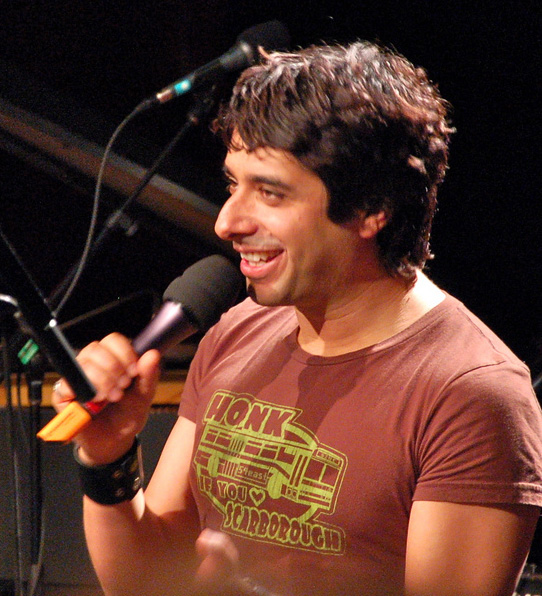
Yet, as the year comes to a close, I want to touch on a different dimension of gender-based violence, one that we have yet to engage and one that relates to perhaps the two highest-profile cases of the year (at least in Canada): Jian Ghomeshi and Bill Cosby. Of course, we could examine the violence performed by these two men over the years through the lens of toxic masculinity and coercive entitlement and it would certainly shed some light on their actions. That, however, is a project for a different day.

Jian Ghomeshi hosting a live taping of his radio show Q in Vancouver, 26 Mar 2009.  Image via Penmachine and has been distributed under the terms of this license. It has not been modified.
I want to end 2014 by focusing not on those who perpetrate gender-based violence, but those who are subjected to its horrors. The most resounding lesson to be gleaned from both the Ghomeshi and Cosby sagas is how remarkably difficult it is for a woman who has experienced sexual violence to speak about it and be believed.

Let us focus on the Ghomeshi case, for it is the most relevant to us here in Canada (indeed, it is particularly relevant to us here on the Men's Team given that Ghomeshi is a former York graduate who once led the York Federation of Students). When the news that the CBC had fired its most prominent radio host first emerged, Ghomeshi released a statement on Facebook exonerating himself of responsibility for any wrong-doing and instead cast aspersion on unnamed women he claimed were about to accuse him of significant sexual misconduct.

Within a day, those accusations emerged in the form of a report by the Toronto Star citing four anonymous women who all stated they had been subjected to sexual violence by Ghomeshi. This is the moment I want to dwell on, for it is the one that says everything about what women who experience this form of violence must endure.

The seemingly-overwhelming reaction online in the press and through social networking platforms was the call to reserve judgement. Let the legal process play itself out, we were told. This was a case of he said-she said. It would be wrong to make any assumptions about what actually happened.

Now, of course, hindsight makes it easy to suggest that this was not the most appropriate or rational response. And, it should be added, there is something deeply damning and disturbing that the word of one man was taken as commensurate with that of four women. Certainly, it speaks to the level of internalized misogyny that remains pervasive in our ostensibly post-feminist society.

But, that's not what I want to focus on either. No, rather, the point that I believe must be underlined repeatedly is this, and it is really very simple: we have an ethical obligation to believe women who say that they have experienced sexual violence. This moral imperative has nothing to do with the particular contingencies of the case in question. Instead, it is predicated on the fact that in the context of a patriarchal society - a society that systematically privileges and empowers men over women -  it is inherently unsafe for women to publicly articulate the harm they have experienced at the hands of men. If we are interested in building a world that is genuinely equitable from the standpoint of gender, we need to begin by acknowledging the systematic nature of women's oppression and the violence men perform against women. We need to believe women when they say that they have experienced sexual violence. Every single time.

Now, don't get me wrong, I am not suggesting that we abandon the legal system or the safeguards that exist to protect the innocent from being falsely proclaimed guilty. (I do reject the insidious and pervasive myth of the false rape accusation, one of Hollywood's favourite tropes most recently seen in the film Gone Girl, a myth that distorts the reality that the rates of false rape accusations are no different than those of false accusations of other crimes.) Men deserve a day in court, just like anybody else.

But, when it comes to the court of opinion, impartiality is no longer a legitimate option. Those who are genuinely concerned about the prevalence of gender-based violence need to stand by those who make accusations whenever they make accusations. We need to start believing women systematically in order to counter the systemic barriers to being believed that women face.

So, the next time that there is a Jian Ghomeshi, don't say you don't know who to believe. In 2015, when the time comes, believe every woman who has the remarkable courage required to say what happened to her.

I promise that there will be plenty of opportunities.

Wednesday, 26 November 2014

Between feminism and counter-feminism: Where does a Men's Centre sit?

By Ernest Velasquez

Last Monday saw the opening of Toronto's first Men's Centre - the Canadian Centre for Men and Families (CCMF). Run by the Canadian Association for Equality (CAFE), the CCMF is billed as a place for "research, outreach and public education dedicated to men’s issues." A place focusing on counselling for men and boys, but open to men and women both, with the goal of "mutual understanding and compassion" across the divide of gender.

But, while the CAFE's rhetoric is apparently noble, its history and associations are a little more troubled.

You may recognize CAFE from its increasing campus presence in places like U of T, York, and Guelph. Or, more likely, you may have heard of them earlier this year when the group was barred from marching in Pride.

The most problematic of these associations are with speakers like Warren Farrell and organizations like A Voice for Men (AVFM) - the latter being an explicitly anti-feminist organization. And while the recent relationship between these two organizations has been tense they can still both be placed broadly within the 'Men's Rights Movement.'

But why bring up these associations at all when discussing the centre? Especially since it looks like CAFE has made some effort to distance itself from what they vaguely described as radicals? Aren't CAFE's projects - things like coping with men's suicide in the wake of Robin William's death or addressing the sexual exploitation of young men - deserving of some grudging acknowledgement?

Even if we can take for granted the distance between moderate and radical MRAs, between CAFE and AVFM (and it may be that we shouldn't take it for granted), and accept many of the issues that the men's right movement and CAFE are trying to address are real, it's still necessary to look at CAFE and the opening of the men's centre with a critical eye. While moderate MRAs like CAFE set themselves apart from AVFM and redpillers through their focus on providing services like counselling and their non-feminist rather than explicitly anti-feminist language, the rhetorical 'silence' of this moderation still implicitly supports the same kind of assumptions that are explicitly - and vitriolically - expressed by groups like AVFM. Namely, that the advancement of feminism has come at the expense of men, and therefore an authentic men's politics must either be articulated either outside or against feminism.

This is not a political project of dismantling patriarchy or hegemonic masculinity - though it does involved shades of critiquing the latter. The discourse of even the moderate MRA's is , if not anti-feminist, then counter-feminist. It assumes that taking men's experiences seriously requires setting up an unconvincing equivalency between men and women's experiences; a misandry to mirror misogyny; a neutered language that talks about 'gender equity' by avoiding discussions of patriarchy; that treats critique of hegemonic or traditional masculinity as evidence for feminist misandry even while acknowledging how these traditional gender roles are damaging to men as well.

So while the new CCMF is ostensibly focused around some very real issues – issues that do need to be addressed – and while CAFE is, in some ways, rhetorically distinct and moderate compared to groups like AVFM, the framing of this ‘moderate’ and counselling focused work still reinforces a serious problem with the men’s rights movement: a tendency to dismiss feminism politics and theory as ‘misandry’.

Thursday, 6 November 2014

Violence, survivor-blaming, and sex work in Newfoundland


By E. A.

Reports of gang rapes and sexual assaults have been reported by sex workers in St John's, Newfoundland since October. As early as October 2, there have been reports of sex workers being called into and then abducted in hotel rooms with as many as 20 men. Although there have been multiple reports, it is feared that there could be a much greater rate of violent incidents that have not been reported because sex trade workers face a high degree of stigma.  The alarmingly large number of these attacks has created controversy, not just from the repulsion of such vicious acts, but also from the lack of legal retribution. The reports of, and subsequent warnings against, the sexual assaults stem from an outreach group (S.H.O.P) that provides social assistance to the sex work community. As of now, there is nothing more than word of mouth and personal warnings that protect the community in St John’s from these incidents.  

Worth noting is the lack of response from law enforcement. They defend their inactivity by stating that no incidents have been reported to them by survivors. It has been reported that the rift of communication between the two parties is based on social stigma. In a small community like St John's, workers find themselves open to exposure and shame. The problem is compounded by the common misconception (stemming from both law enforcement and common discourse) that sees the issue as the fault of the survivors.  Workers complain that when they do go to police to report incidents of this nature (assaults or robberies) they are often seen as responsible for the assaults, creating understandable tension and mistrust. 

Although the survivors include both women and men, we can see that there is a strong objectification of femininity at the cause of these issues. Firstly, those who engage in the horrific acts against sex workers may see it as a thrill or an act of violence. Regardless, sex trade workers are targeted due to the perceived stigma that they are beneath attackers either socially, economically, or both. This reinforces the archaic dichotomy that sees women as objects, a conception furthered by the socio-economic conditions surrounding sex work. Women (and men) who are engaged in prostitution or other fields of sex work are stigmatized; there is a stereotype that sees them as destitute, wayward, poor, or unable to assimilate into society. These conceptions are dehumanizing and are furthered by patriarchal notions that define women as disposable tools for the gratification of male selfish desires (whether they be violent, sexual, or anything else). The women who engage in sex work, through no fault of their own, become a vehicle for the reinforcement of dominant, masculine ideology.

Secondly, the reaction from law enforcement reflects broader social attitudes: victim-blaming and a lack of response point to a belief that such crimes are to some degree justified. The insidious "she was asking for it" motif underlines these conceptions. There is still an institutional acceptance that the appearance and attire of an individual (specifically women) can create a legitimate justification for the sordid violence perpetrated by predatory individuals (typically men). 

The issues outlined in St John's are as complex as they are disconcerting and speak to broader social attitudes that simultaneously legitimize the objectification of women and blame survivors of sexual violence for its perpetration. In order to create a society that is safe for women of all occupations, we need to acknowledge just how deeply-rooted these patriarchal beliefs are. Sexual violence is not a problem instigated by women ever, regardless of appearance or occupation. It is a problem endemic to a society that tacitly legitimizes the objectification and dehumanization of women.

Wednesday, 29 October 2014

Gender and Halloween: Costumes for women

Christopher Ford

Its that time of year again.

The leaves have already begun to change colour and fall, the temperature has been dropping steadily (maybe even a little too much could you give it a rest, winter?!?), and mid-term season has hit many of us like a tonne of bricks. However, most importantly, we will all very soon be dressing up to celebrate Halloween a day that is, for many university students, one of the best days of the year.

I mean, whats not to like about Halloween? Theres sugary food, pumpkin carving, horror movie marathons, parties, and, of course, costumes.

Now, I love Halloween as much as the next person. But theres one thing that I dont like about it, and it has to do primarily with last thing I mentioned in the previous sentence: Costumes.

Let me explain. Its not that I dont like the dressing up part of Halloween I think its great! People can get super creative with their costumes (especially super-scary ones like these), and I think thats all part of the magic of the holiday.

However, what I dont like is how mainstream, ready-made costumes like the ones sold at your local Party City, Value Village, et cetera perpetuate problematic beliefs about what it means to be male and female, and how we should act as a man or a woman.

In this post, which will function as the first in a two-part series, I will examine costumes that are marketed towards women and girls. In part two, which will be published shortly after, I we shift my attention to costumes marketed towards men and boys.

So lets say, for the sake of argument, that you are a woman who wants to dress up as a firefighter for Halloween. If you look under the womens section in your local costume stores flyer or catalogue, what do you think you will see?


Probably something like this:

Still with me? Okay, now lets say that you are going to be doing a joint costume with a male friend, and he is also looking to dress up like a firefighter. If he looks under the mens section in the same stores flyer, he is most likely to see something like this:


Now, I know some of you may be thinking: whats the problem? 

Well, let me ask you: which one seems more realistic? Have you ever met any firefighter, male or female, who wears skin-tight shorts, knee-high stiletto boots, and a low-cut shirt while theyre at work?

I highly doubt it.

For me, and for many other feminist writers, the over-sexualization of women that manifests through the costume industry is the problem. The costumes that are marketed towards women often have little (or nothing) to do with what they are aiming to portray. In the example above, other than the colour red and the hat, what does the womans costume have to do with being a firefighter?

This is not an isolated example. A recent story in the CBC recounted a British Columbia woman’s frustrations while trying to find a firefighter costume for her daughter, and this led to her making some of the same observations that I have made above.


This photo, created by Raina Delisle, compares costumes marketed towards young girls with those marketed to young boys.


Theres a girls version and a boys version. Now, the boys version looks like the real thing. The model on the package has a hardhat, a jacket and even an axe, the woman, Raina Delisle, told the CBC. The girls version, on the other hand, looks absolutely nothing like a firefighter. Its a skin-tight, black, shiny dress. It doesnt even have a helmet.

What those costumes tell me is that the boys can wear the real thing. They can be a real firefighter. The girls, on the other hand, cant. They can dress up pretty and pretend to be a firefighter, but they could never aspire to be the real thing, she said.

This is pretty profound, and, I think, 100% correct. Our current society, which markets extremely sexualized costumes to women, is perpetuating the belief that certain jobs are reserved for men and only men. Companies, by creating sexy costumes like this without a normal alternative which, I might add, they do for men are assisting in the maintenance of an unfair, gendered division of labour.

Now, I was discussing this topic with a friend of mine the other day, and he confessed to me that he was confused. He asked me, Why are we saying that womens costumes are overly-sexualized, and condemning the over-sexualization of these costumes, while at the same time repeating the refrain that women have the right to dress however they want and to wear costumes like these? Isnt that contradictory?

Well, no, its not. Women should not be criticized for wearing a ‘sexycostume, because they should be able to wear them if they so choose. However, we should be critical of companies who produce costumes that are blatantly sexualized and market them to women and girls as the only choice. In the case of mens costumes, a costume like this:


is labelled police officer, while a costume like this: 


is labelled sexy police officer. Do the same for women and girls, so that they may choose what they want to wear, rather than telling them that they have to wear a costume that is overly sexualized. And if they choose to wear something sexy, thats their choice, and their right.

Oh, and whether its a male, female, transgender, or otherwise gender-queer person wearing a sexy costume, let me remind everyone that sexy does not equal consent.

What about costumes marketed for men and boys, you ask? Stay tuned for part two!